How Modern Arthroscopy Techniques Improve Recovery After Knee Injury
Most patients are not afraid of surgery.
They are afraid of what comes after.
The real question is simple.
“When will my knee feel normal again?”
That is why recovery matters more than the operation itself.
Arthroscopy is not the goal.
Walking without fear is.
In my experience as an arthroscopic surgeon in Nagpur, patients rarely ask about instruments or incision size. They ask when they can climb stairs again, when the swelling will settle, and when they can trust their knee.
Modern arthroscopy has changed recovery in meaningful ways.
But only when it is used with judgment.
Why Recovery Defines Success, Not the Surgery Day
A successful surgery means very little if recovery is poor.
Patients often assume that once the procedure is over, healing will follow automatically. That is not how knees work. Recovery depends on how much healthy tissue is preserved, how stable the joint remains, and how the body responds over weeks, not hours.
Arthroscopy is a tool.
Recovery is a process.
When patients focus only on the surgery date, they miss the larger picture. The knee does not care how advanced the technique is. It responds to stress, movement, timing, and restraint.
This is where modern arthroscopy has quietly shifted outcomes.
What Has Actually Changed in Modern Arthroscopy
When patients hear “modern arthroscopy,” they often imagine better machines or smaller cameras.
That is not the real shift.
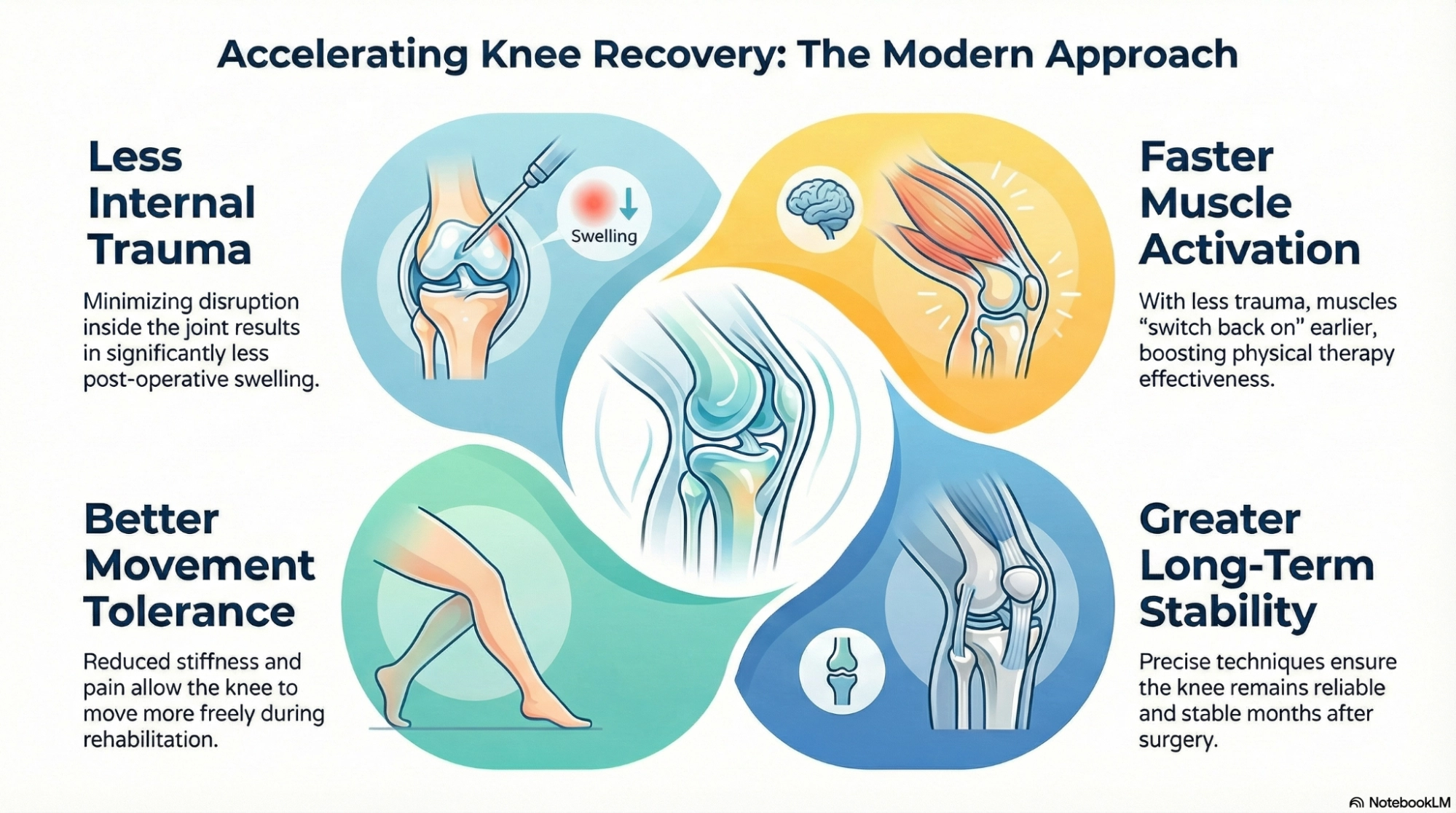
The biggest change is how much the knee is disturbed during surgery.
Earlier arthroscopies often focused on fixing everything visible inside the joint. Torn edges were trimmed aggressively. Areas that looked abnormal were addressed, even if they were not causing symptoms.
Modern arthroscopy takes a more selective approach.
The goal now is to interfere as little as possible while restoring stability and function. Healthy tissue is preserved. Only structures that affect movement, pain, or long-term joint health are addressed. This is why, when you search for the “Best Arthroscopy Surgeon in Nagpur,” you should not be just looking for someone who operates the most. It should refer to someone who chooses carefully.
This change directly affects recovery.
Less internal disruption means less swelling after surgery. Muscles switch back on earlier. Stiffness reduces faster. Rehabilitation becomes smoother, not because it is rushed, but because the knee tolerates movement better.
In simple terms, modern arthroscopy improves recovery by doing less, but doing it more thoughtfully.
Smaller Incisions Do Not Guarantee Faster Recovery
This is a common misunderstanding.
Minimal cuts do not mean minimal recovery.
Some patients expect to walk normally within days. When that does not happen, frustration sets in. Families push. Work pressure builds. Confidence drops.
A stable knee heals better than a rushed knee.

Modern arthroscopy allows precision. It does not remove the need for patience. In fact, experienced surgeons often deliberately slow patients down. Not because recovery is failing, but because healing is still in progress.
Recovery is not about how fast you move.
It is about how well you move months later.
Arthroscopy in ACL and Ligament Injuries
Ligament injuries test both technique and judgment.
In ACL cases, the quality of recovery depends on tunnel placement, graft tension, and how much surrounding tissue is protected. Small errors here do not show immediately. They appear months later as instability or pain.
Modern arthroscopy reduces unnecessary trauma inside the joint. This lowers swelling and stiffness. It allows better rehabilitation planning.
This is also the stage at which patients begin seeking clarity. Many look online for the Best ACL Surgeon in Nagpur, hoping expertise will translate into confidence. What they are really searching for is someone who understands long-term knee behaviour, not just surgical steps.
ACL recovery is not linear. Good technique supports recovery, but discipline completes it.
Why Surgical Judgment Matters More Than Technique
Technique without judgment is dangerous.
Not every knee problem needs surgery.
Not every tear needs immediate repair.
One of the hardest decisions is choosing not to operate.
Timing matters. Patient age matters. Activity level matters. Expectations matter. Operating too early or too aggressively can slow recovery rather than improve it.
Good judgment shows up after surgery, not during it. In fewer complications. In fewer setbacks. In steadier recovery.
Rehabilitation: Helped by Arthroscopy, Driven by Discipline
Modern arthroscopy supports rehabilitation.
It does not replace it.
Early movement is possible when the knee is stable. Pain is better controlled. Swelling is often lower. These advantages only help if rehabilitation is taken seriously.
Many recovery failures come from overconfidence. Patients feel better early and stop structured exercises. Or they push too hard, too soon.
Recovery is not about comfort.
It is about consistency.
When rehab is ignored, even the best surgery struggles.
What Feels Normal vs What Needs Attention
Some post-surgery sensations worry patients unnecessarily.
Mild swelling after activity is common.
Morning stiffness is expected.
Occasional pulling sensations happen as tissues heal.
What should not be ignored is increasing instability, sharp pain during simple movements, or swelling that worsens week after week.
Listening to your knee matters more than comparing timelines with others.
Family Pressure and Recovery Timelines
Many patients face pressure to return quickly. (I’ve often noticed this in my practice)
Work demands. Household expectations. Social commitments.
Modern arthroscopy has shortened recovery windows, but it has not eliminated healing time. The knee still follows biological rules. No matter what techniques we use, the body has got its own sense of rules for healing.
Clear communication reduces conflict. When families understand that patience protects long-term function, support improves.
Recovery should not feel like a negotiation.
Why Outcomes Differ Between Patients in the Same City
Two patients can undergo similar procedures and recover very differently.
Access to rehabilitation.
Consistency of follow-up.
Daily activity demands.
Support systems.
Surgery is one day. Recovery is months.
Choosing the right surgeon locally matters because recovery guidance does not end in the operating room. It continues through follow-ups, course correction, and reassurance when progress feels slow.
A Simple Reframe on Modern Arthroscopy
Modern arthroscopy has changed recovery after knee injury, but not in the way most people expect.
Recovery improves because the knee is handled with more restraint.
Because healthy tissue is protected.
Because stability is prioritised over speed.
This allows better rehabilitation tolerance, fewer setbacks, and more predictable long-term confidence in the knee.
But no technique replaces judgment.
And no surgery replaces discipline during recovery.
The real success of modern arthroscopy is not evident on the day of the operation.
It is seen months later, when the knee feels reliable again in daily life.
That is when recovery is complete.
Latest Post